USB-C PD power banks help you stay connected away from wall outlets. Whether you commute, travel, work remotely, or spend time outdoors, the right portable charger can power a smartphone, tablet, headphones, handheld console, or compatible laptop. In addition, modern models offer faster charging, clearer displays, compact designs, and useful safety features.
What Is a USB-C PD Power Bank?
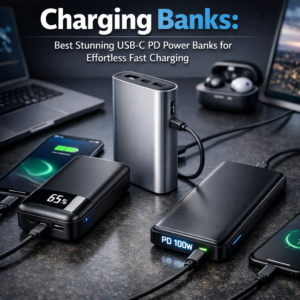
A USB-C PD power bank uses USB Power Delivery technology to charge devices through a USB-C port. Unlike older USB standards, USB PD negotiates the voltage and wattage that each device needs. As a result, one charger can efficiently power small accessories and larger electronics.
Power Delivery models come in several capacities and output ratings. For example, a compact unit may provide 20W to 30W for most smartphones and tablets. More powerful models can deliver 65W, 100W, or more for compatible laptops. Before you buy, check your device’s requirements and confirm that the charger supports its needed output.
USB-C PD Power Bank: Why Fast-Charging Portable Chargers Matter
A fast-charging portable charger saves time when you need power quickly. Instead of waiting hours, a compatible model can restore a useful amount of battery during a short break. Therefore, this benefit matters at airports, conferences, on public transportation, and during long outdoor activities.
Fast charging also reduces the number of accessories you need to carry. In addition, a power bank with enough wattage can charge a phone, earbuds, smartwatch, and tablet throughout the day. Some models charge several devices at once. However, the charger may divide its total output between connected ports.
For dependable performance, look for these features:
- USB-C input and output
- Power Delivery support
- Clearly stated wattage and capacity
- Overcharge, overheating, and short-circuit protection
- Pass-through charging, when needed
- Multiple ports for different device types
USB-C PD Power Bank: Choosing the Right Capacity
Manufacturers usually list capacity in milliampere-hours, or mAh. Smaller models between 5,000mAh and 10,000mAh suit daily phone users who want a light charger. For example, a 10,000mAh unit can often provide one or more phone recharges. Actual results depend on the phone’s battery size and the charger’s conversion efficiency.
A 20,000mAh model offers more reserve power for travel, photography, gaming, or extended workdays. However, higher capacity usually adds weight and size. Also, airlines may restrict high-capacity lithium batteries. Consequently, check current airline and government rules before you fly.
Design Options for Different Lifestyles
A MagSafe magnetic power bank suits compatible iPhones and cases. It attaches to the back of the device, reduces cable clutter, and lets you charge while using your phone. In particular, magnetic alignment helps with navigation, photography, and commuting. Still, check compatibility because wireless charging may run slower than wired USB-C charging.
Meanwhile, an OLED smart digital display power bank shows the remaining battery percentage, charging status, or output information. A numerical display gives more precise information than indicator lights. Therefore, it can help you avoid unexpected power loss.
An ultra-slim pocket power bank works well for minimalists. These models fit in a jacket pocket, purse, or small travel pouch. They usually suit phones and smaller accessories. However, their lower capacity may not support repeated laptop or multi-device charging.
Sustainable Materials and Responsible Buying
An eco-friendly bioplastic power bank may appeal to shoppers who want to reduce conventional petroleum-based plastic use. Depending on the design, bioplastic components may contain some or many renewable materials. Even so, consider durability, repairability, battery life, and recycling options before you buy.
A durable charger can reduce electronic waste more effectively than a cheap model that needs frequent replacement. For that reason, look for reputable brands, clear safety certifications, durable construction, and battery recycling guidance. Responsible disposal matters when the battery reaches the end of its useful life.
Charging Several Devices at Once
A multi-device charging brick helps households, offices, and travelers power several electronics. These chargers may combine USB-C PD ports with USB-A connections. As a result, they can support newer devices alongside older cables and accessories.
When you charge multiple devices, check the total wattage and each port’s output. A charger with a high combined rating may distribute power dynamically. For instance, one port could receive less power after you connect another device. Intelligent power allocation helps, but the specifications must still match your equipment.
For more portable charging options, explore our guide to the best portable chargers for fast charging. For technical background, review the USB-IF overview of USB Power Delivery.
When a High-Wattage Power Station Is Better
A high-wattage power station suits users who need to run laptops, cameras, monitors, small appliances, or several electronics for long periods. These units typically include larger batteries, AC outlets, multiple USB-C ports, and sometimes car-charging or solar-input support.
Although a power station weighs more than a pocket charger, it helps with remote work, camping, emergency preparedness, and outdoor production. Therefore, choose a model with enough continuous output for your most demanding device. Also, verify that it supports your equipment’s charging method.
Safety and Maintenance Tips
Always use quality cables rated for the charging level. Damaged cables can slow charging and create safety risks. In addition, keep the power bank away from extreme heat, moisture, and direct sunlight. Also, avoid placing heavy objects on it while it charges.
Stop using any battery that looks swollen, cracked, or leaky, or that becomes unusually hot. Instead, recycle lithium-ion batteries through an approved electronics or battery collection program. Never place them in household trash. Finally, store the charger in a cool, dry location and recharge it periodically during long-term storage.
Ultimately, the best USB-C PD power bank balances speed, capacity, portability, compatibility, and safety. A slim everyday charger may suit a phone user, while a high-output model can support a laptop. By matching the specifications to your devices, you can enjoy reliable charging without carrying unnecessary equipment.