
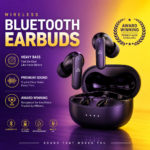


This wireless earbuds buying guide explains how to compare sound quality, comfort, battery life, noise control, and smart features. Whether you need earbuds for commuting, exercise, work calls, or everyday listening, the right pair should match your routine and priorities.
For another helpful perspective, this Wireless Earbuds Buying Guide highlights practical trade-offs for buyers. However, the best pair is not necessarily the most expensive. Comfort, connection stability, battery performance, microphone quality, durability, and sound tuning all matter. Understanding these features makes it easier to choose earbuds that feel natural in your ears and deliver reliable performance wherever you use them.
Wireless Earbuds Buying Guide: Why wireless earbuds are worth considering
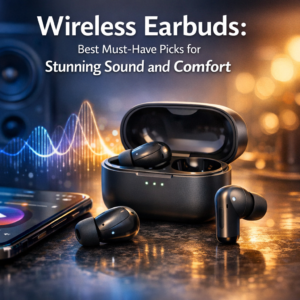
For another helpful perspective, this Wireless Earbuds Buying Guide highlights practical trade-offs for buyers. Unlike traditional wired headphones, wireless earbuds connect to a phone, tablet, computer, or smartwatch through Bluetooth. Most modern models use a charging case that protects the earbuds while also providing several additional charges. As a result, this compact design makes them especially useful for travel, work, exercise, and everyday listening.
Additionally, many premium wireless earbuds now include touch controls, voice assistant support, automatic ear detection, multipoint pairing, and app-based customization. These features allow users to pause playback, answer calls, adjust noise control, or switch between devices without reaching for a phone.
The most important improvement has been in sound quality. High-quality Bluetooth earbuds can now produce balanced bass, clear vocals, and detailed treble that rival many wired options. Better wireless codecs and improved internal drivers have also reduced the gap between convenience and performance. For background information about how Bluetooth works, see the Bluetooth SIG overview of Bluetooth technology.
Wireless Earbuds Buying Guide: Sound quality and true wireless stereo
True wireless stereo earbuds use separate left and right earpieces without a connecting cable. Each earbud receives its own audio signal, creating a spacious stereo presentation and complete freedom of movement. Consequently, this design is now standard among most premium and midrange wireless models.
When comparing sound, look for earbuds with well-tuned drivers rather than simply choosing the model with the largest driver size. A good pair should deliver controlled bass without overpowering vocals, clear midrange frequencies for podcasts and dialogue, and detailed high frequencies without sounding harsh.
Many companion apps offer equalizer settings that allow listeners to adjust the sound. For example, presets may include bass boost, vocal enhancement, or a balanced profile. Some earbuds also use personalized hearing tests to create a sound profile based on an individual’s hearing preferences.
For more help comparing features and styles, explore our detailed wireless earbud features and buying guide.
Wireless Earbuds Buying Guide: Active noise cancelling earbuds for focus
Active noise cancelling earbuds use microphones to detect surrounding sounds and generate opposing frequencies that reduce external noise. They are particularly helpful on airplanes, trains, busy streets, and in shared offices.
Moreover, the best active noise cancelling earbuds usually offer several listening modes. Full noise cancellation creates a quieter environment, while transparency mode uses external microphones to let surrounding sounds pass through. This is useful when crossing a street, speaking with someone, or listening for announcements.
Noise cancellation performance varies by sound type. Low, continuous sounds such as engine noise are generally reduced more effectively than sudden voices or sharp sounds. A secure ear tip seal also has a major effect, since passive isolation helps block external noise before electronic processing begins.
Comfort, fit, and everyday usability
Even excellent-sounding earbuds can be disappointing if they cause discomfort. Ear shapes differ, so a model that fits one person perfectly may feel loose or irritating to someone else. Therefore, look for products that include several silicone tip sizes and, when available, optional foam tips or stabilizing wings.
A comfortable fit should feel secure without creating excessive pressure. The earbuds should remain in place during normal movement but should not require constant adjustment. Lightweight designs are usually better for extended listening, while ergonomic shapes can help distribute pressure more evenly.
Those who dislike the sealed sensation of traditional earbuds may prefer an open ear earbud design. Open-ear models rest near the ear canal rather than blocking it completely, allowing users to remain more aware of traffic, conversations, and their surroundings. They may not provide the same bass response or noise isolation as sealed earbuds, but they are useful for outdoor activities and safety-conscious listening.
Battery life and charging convenience
Long battery life earbuds are valuable for commuters, travelers, students, and anyone who spends many hours away from a power outlet. Manufacturers typically state battery performance for the earbuds alone and for the earbuds combined with the charging case.
In practice, actual battery life depends on volume, noise cancellation, call usage, and other features. Active noise cancellation and spatial audio can reduce playback time, so shoppers should check performance estimates under realistic conditions. A useful pair should provide several hours of listening on a single charge, while the case should offer multiple additional charges.
Fast charging is another convenient feature. Some models can provide an hour or more of playback after only a few minutes in the case. Wireless charging can also be helpful, especially for users who already own a compatible charging pad.
Spatial audio earbuds and immersive listening
Spatial audio earbuds create a wider, more three-dimensional listening experience. Depending on the device and content, this technology can simulate sound coming from different directions. It is especially engaging for compatible movies, television shows, and music tracks mixed for immersive audio.
Some spatial audio earbuds support dynamic head tracking. This feature adjusts the soundstage as the listener moves, making audio appear anchored to the screen or a fixed location. While the effect can be impressive, it may use more battery power and is not equally beneficial for every type of music.
Compatibility is important. Spatial audio may depend on the operating system, streaming service, device, and content format. Before paying extra for this feature, confirm that it works with the devices and apps used most often.
Choosing sports and waterproof models
Sports wireless earbuds should remain stable during running, cycling, gym sessions, or other movement. Ear hooks, wing tips, and textured surfaces can improve security. Physical or touch controls should also be easy to operate with sweaty hands.
For exercise and outdoor use, water resistance is essential. Waterproof Bluetooth earbuds are often marketed for workouts, but consumers should examine the exact protection rating. Some models resist sweat and light splashes, while others can handle heavy rain or temporary submersion.
Still, no earbuds are completely indestructible. Even water-resistant models should be dried after use, and charging cases should be kept away from moisture. Salt from sweat can also affect contacts over time, so regular cleaning helps maintain charging reliability.
Call quality and connectivity
Bluetooth earphones are increasingly used for work calls, video meetings, and voice messages. Multiple microphones and noise-reduction algorithms can improve voice clarity by filtering wind and background sounds. However, performance depends on microphone placement, software processing, and the environment.
A stable Bluetooth connection is equally important. Modern earbuds typically offer dependable range, quick pairing, and low-latency modes for gaming or video. Multipoint connectivity allows some models to remain connected to two devices, making it easier to switch between a laptop and smartphone.
Before buying, check compatibility with the phone and computer operating systems. Some advanced features may be limited when earbuds are paired with devices from another brand.
How to select the right pair
Start by identifying the main use case. Travelers may prioritize active noise cancellation, comfortable tips, and strong battery performance. Runners may need secure sports wireless earbuds with reliable water resistance. Office workers may value microphone quality, transparency mode, and multipoint connectivity.
Sound preferences also matter. Bass-focused listeners should look for adjustable equalization, while fans of acoustic music and podcasts may prefer a balanced profile with clear vocals. Those who frequently listen outdoors may benefit from open-ear designs that preserve environmental awareness.
Finally, consider durability and support. A reputable brand with regular firmware updates, replacement ear tips, and a dependable warranty can offer better long-term value than a cheaper model with limited service. Ultimately, the ideal earbuds should combine comfortable design, consistent connectivity, satisfying sound, and features that genuinely improve daily listening rather than simply adding complexity.