Choosing the right USB-C to USB-C cable can improve charging speed, safety, and everyday convenience. In addition, iPhone and Samsung devices use different connector types, power standards, and charging technologies.
For another helpful perspective, this USB-C to USB-C Cable highlights practical trade-offs for buyers. In practice, the best cable depends on your phone model, charger, power needs, and preferred length. For example, options range from compact travel cables to an extra-long nylon braided phone cable for home, office, or bedside use.
This guide explains the main charging cable styles and what to look for when buying a reliable cable. For additional options, visit the Phone Finesse shop.
USB-C to USB-C Cable: Main Charging Cable Types
USB-C to USB-C Cable
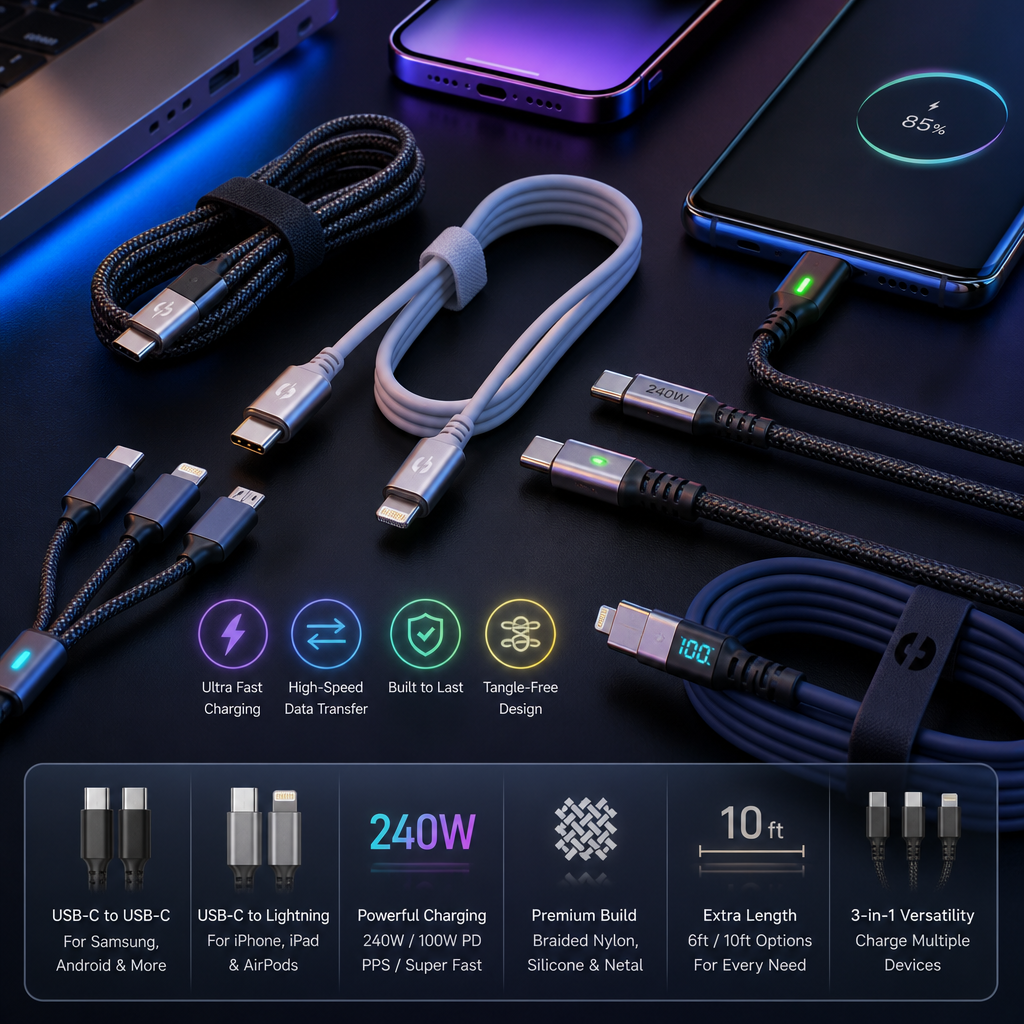
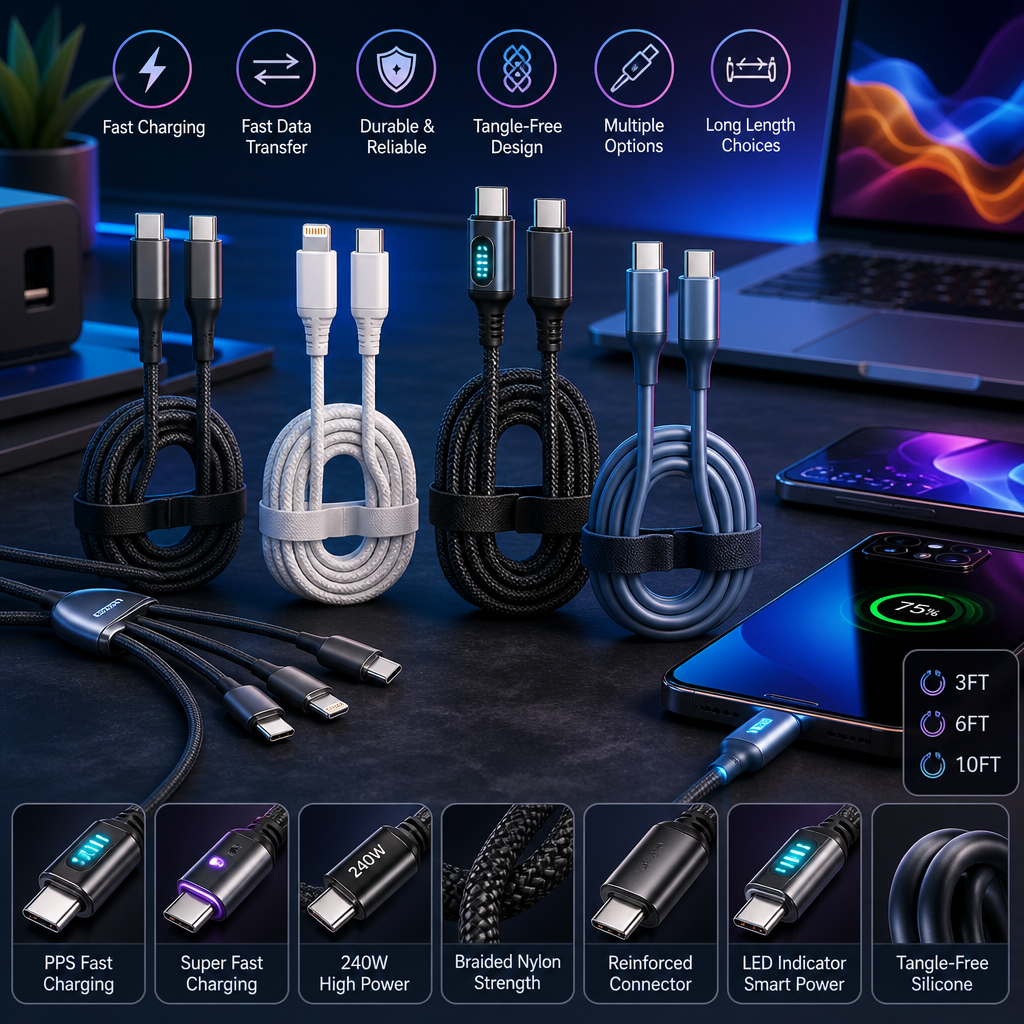
A USB-C to USB-C cable has a USB-C connector on both ends. As a result, it works with many modern Samsung Galaxy phones, tablets, laptops, power banks, and USB-C iPhone models.
For example, this cable is ideal for:
- Samsung Super Fast Charging
- USB-C iPhones
- USB-C wall chargers
- High-power tablets and laptops
- Fast data transfer USB-C connections
- Power delivery charging
For high-speed charging, choose a cable that supports USB Power Delivery, or PD. In particular, a quality 100W PD cable can handle phones, tablets, and many laptops when paired with a compatible charger. The USB-IF USB Power Delivery overview explains how compatible USB-C charging systems manage power.
USB-C to USB-C Cable: USB-C to Lightning Cable
A USB-C to Lightning cable is designed for iPhones and other Apple devices with a Lightning port. It connects the device to a USB-C wall charger, power bank, or computer.
For dependable iPhone charging, look for an MFi certified USB-C to Lightning long cord. In addition, MFi certification helps confirm compatibility with supported Apple devices and reduces the risk of warning messages or unreliable charging.
A 6ft iPhone charger is a practical choice for desks, bedside tables, cars, and travel. Therefore, a longer cable provides more flexibility than the standard short cable included with many devices.
USB-A to USB-C Cable
USB-A to USB-C cables remain useful with older wall chargers, computers, car adapters, and power banks. However, they may not deliver the same charging performance as a USB-C to USB-C cable, although they offer broad compatibility.
This style is helpful when:
- Your charger has a USB-A port
- You use an older computer
- You need a replacement cable for a car charger
- You want a backup cable for travel
Charging Cables for Samsung Phones
Many modern Samsung phones support USB-C charging. In addition, some models support Samsung Super Fast Charging, which requires a compatible charger, device, and cable.
A PPS fast charging cable can support Programmable Power Supply charging when used with a compatible Samsung charger. Specifically, PPS allows the charger and phone to adjust voltage and current more precisely.
A reliable Super Fast Charging cord should offer:
- USB-C connectors
- Support for appropriate power levels
- Strong internal wiring
- Stable power delivery
- Heat-resistant materials
- Reinforced connector housings
However, the cable alone does not guarantee maximum charging speed. Instead, the phone, charger, cable, and charging protocol must all work together.
Charging Cables for iPhone
iPhone charging needs depend on the model and connector type. Meanwhile, older and many current devices use Lightning ports, while newer models use USB-C.
For a Lightning iPhone, select a certified USB-C to Lightning cable. For a USB-C iPhone, choose a USB-C to USB-C cable with suitable power and data specifications.
A good iPhone cable should provide:
- Reliable device compatibility
- Stable charging performance
- Strong connector construction
- Flexible insulation
- Protection against bending and fraying
- Suitable length for your setup
As a result, a long cable is especially useful when outlets are behind furniture or positioned far from a bed, desk, or sofa.
Braided Cables Versus Silicone Cables
The outer material affects durability, flexibility, and handling. Therefore, compare the jacket material with your daily charging habits.
Braided Nylon USB Cable
A braided nylon USB cable uses woven fibers around the inner insulation. This construction helps protect against daily wear and repeated bending.
Benefits include:
- Improved resistance to fraying
- A textured, premium feel
- Better protection from surface scratches
- Strong performance in travel bags
- Reduced cable tangling compared with basic plastic cables
A braided cable may feel slightly firmer than a silicone cable. However, it is often a strong choice for users who frequently plug in and unplug their devices.
Tangle-Free Silicone Charging Cord
A tangle-free silicone charging cord is soft, smooth, and flexible. Consequently, it is easy to coil and works well in tight spaces.
Silicone cables are useful for:
- Nightstands
- Office desks
- Cars
- Travel pouches
- Portable chargers
- Frequent daily use
The smooth surface can make the cable easier to wipe clean. Moreover, some silicone designs resist knots better than standard PVC cables.
What Makes a Cable Heavy-Duty?
A heavy-duty reinforced phone cord is built for repeated use. It usually combines reinforced connectors, stronger internal conductors, and flexible strain relief.
Important construction features include:
Reinforced Strain Relief
Strain relief protects the area where the cable meets the connector. This is one of the most common points of failure because it bends whenever the phone is used while charging.
Durable Metal Connector Charging Wire
A durable metal connector charging wire can provide additional protection around the plug. In contrast to lightweight plastic designs, metal connector housings may resist cracking and impact better.
Flexible Internal Conductors
Quality cables use flexible copper wiring that can handle regular movement. The cable should bend without feeling stiff or developing sharp kinks.
Protective Outer Jacket
A braided nylon jacket or flexible silicone exterior adds another layer of protection. Ultimately, the best option depends on whether you prefer maximum abrasion resistance or a softer, more flexible feel.
Understanding 240W USB-C Cables
A 240W USB-C cable is designed for high-power USB-C charging. It can support demanding devices such as laptops and certain high-powered accessories when paired with a compatible charger.
For phones, 240W capacity is usually more than necessary. Even so, choosing a high-rated cable can provide extra versatility for a household with multiple USB-C devices.
A 240W USB-C cable may be useful for:
- USB-C laptops
- Gaming devices
- Tablets
- Monitors
- Docking stations
- High-capacity power banks
- Phones and accessories
The charger and connected device control the actual power level. Therefore, a 240W rating does not force a phone to receive 240W.
Cable Length: 6ft or 10ft?
Cable length affects convenience and portability. For that reason, choose a length that matches the distance between your device and the outlet.
6ft iPhone Charger
A 6ft cable is long enough for most desks, nightstands, and workspaces. It offers a good balance between reach and portability.
Choose a 6ft cable when you need:
- Easy bedside charging
- Comfortable phone use while plugged in
- A manageable travel cable
- Less excess cable on a desk
10ft USB-C Cable
A 10ft USB-C cable is ideal when the outlet is far away. It can reach across a room, behind furniture, or from a wall outlet to a sofa.
A long phone charger cable is helpful for:
- Bedrooms
- Living rooms
- Hotel rooms
- Large office desks
- Airports and waiting areas
- Charging from distant power banks
Long cables can be heavier and more difficult to organize. Fortunately, a braided design or tangle-resistant silicone jacket can make a 10ft cable easier to manage.
Fast Charging and Power Ratings
Cable power ratings describe how much electrical power the cable can safely support. Common ratings include 60W, 100W, and 240W.
100W PD Cable
A 100W PD cable is a versatile option for phones, tablets, handheld gaming systems, and many laptops. In many cases, it is a practical choice for users who want one cable for multiple devices.
240W USB-C Cable
A 240W cable offers a higher power ceiling for compatible equipment. Thus, it can be a useful long-term choice for high-powered USB-C devices.
PPS Fast Charging Cable
A PPS fast charging cable is designed for devices that use PPS charging protocols. It can help support efficient charging on compatible Samsung phones and chargers.
Always check the specifications of your phone and charger. A high-rated cable cannot add charging features that the device or power adapter does not support.
Data Transfer Performance
Not every charging cable offers the same data speed. Some cables are made mainly for charging, whereas others support fast file transfers.
A cable labeled for fast data transfer USB-C should list its supported data standard or speed. This matters when transferring:
- Photos
- Videos
- Music
- Documents
- Device backups
- Large work files
If you only need charging, basic data support may be enough. Conversely, if you regularly connect a phone to a computer, choose a cable with clearly stated data specifications.
Useful Extra Features
Some charging cables include features that improve everyday use. For example, an indicator or multiple connector can make a cable more convenient.
LED Indicator Charging Cord
An LED indicator charging cord uses a small light to show charging activity or cable connection status. This can be helpful in dark rooms or inside a car.
The light should be subtle enough for nighttime use. Otherwise, a bright indicator may be distracting near a bed.
Multi-Functional 3-in-1 Charging Cable
A multi-functional 3-in-1 charging cable includes multiple connector types in one design. It may combine USB-C, Lightning, and another connector for older devices or accessories.
This type of cable can reduce the number of cords in a travel bag. In addition, it is useful for households with a mix of iPhone, Samsung, earbuds, and other devices.
However, users who need the fastest charging or highest data speeds may prefer a dedicated cable for each device. Before buying, compare the connector, length, power rating, data speed, and construction materials.
How to Choose the Right Cable
Start by checking the port on your phone and the port on your charger. Next, confirm the required charging protocol, power rating, and data speed.
- Choose a USB-C to USB-C cable for USB-C phones and compatible USB-C chargers.
- Choose a certified USB-C to Lightning cable for Lightning iPhones.
- Select braided nylon when abrasion resistance matters most.
- Select silicone when flexibility and easy coiling are priorities.
- Choose 6ft for portability or 10ft for maximum reach.
- Check connector reinforcement if the cable will receive frequent use.
With the right combination of connector type, charging support, length, and materials, your cable can provide dependable everyday performance for both iPhone and Samsung devices.