
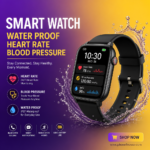
This smart watch guide explains the key choices, value factors, and practical details to consider before buying. Smart watches have evolved beyond simple digital timepieces. Today, they connect communication, health, productivity, and entertainment in one compact device. Whether you want to track workouts, answer messages, manage calls, monitor wellness, or check your phone less often, the right model can simplify daily routines.
Smart Watch Guide: Why Smart Watches Matter in Everyday Life
For another helpful perspective, this Smart watch guide highlights practical trade-offs for buyers. This guide highlights practical trade-offs for buyers. Above all, the biggest advantage of a smart watch is convenience. Users can glance at their wrist for notifications, calendar reminders, weather updates, navigation prompts, and incoming calls. As a result, this quick access helps during commutes, meetings, workouts, and busy household routines.
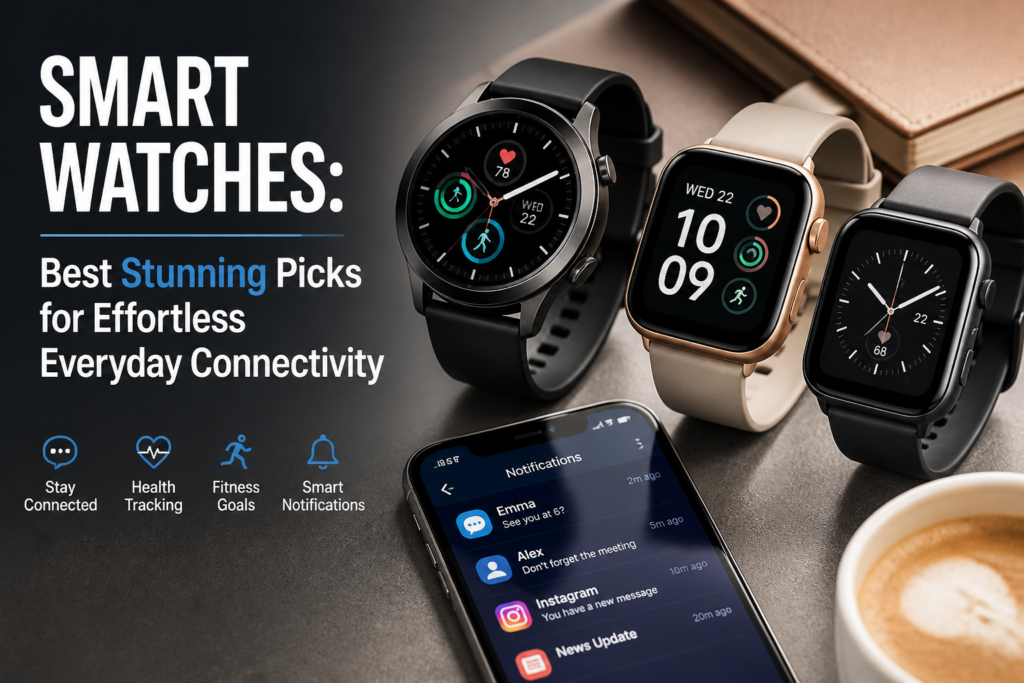
Modern models also offer a more personalized experience. For example, you can customize watch faces with your heart rate, daily steps, battery status, appointments, or local weather. In addition, interchangeable bands and varied case finishes suit professional settings, outdoor adventures, and casual weekends.
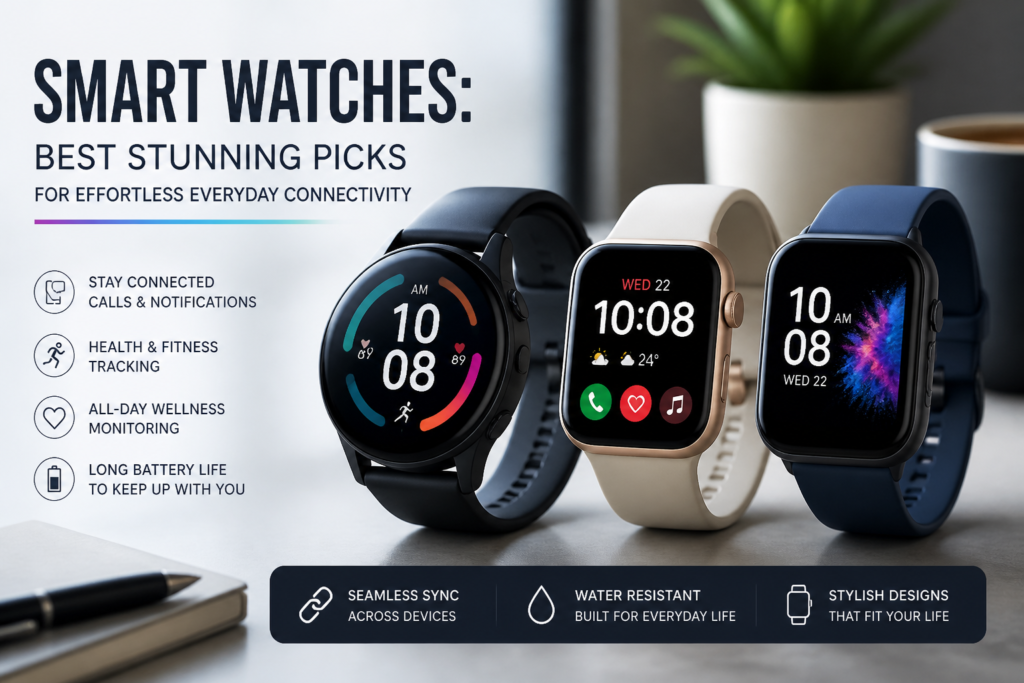
For more buying ideas, explore our best smart watches for every lifestyle.
Smart Watch Guide: Best Smart Watches for Different Lifestyles
There is no single best model for everyone. Instead, your ideal choice depends on your smartphone, preferred features, and charging habits.
Smart Watch Guide: Best for iPhone Users
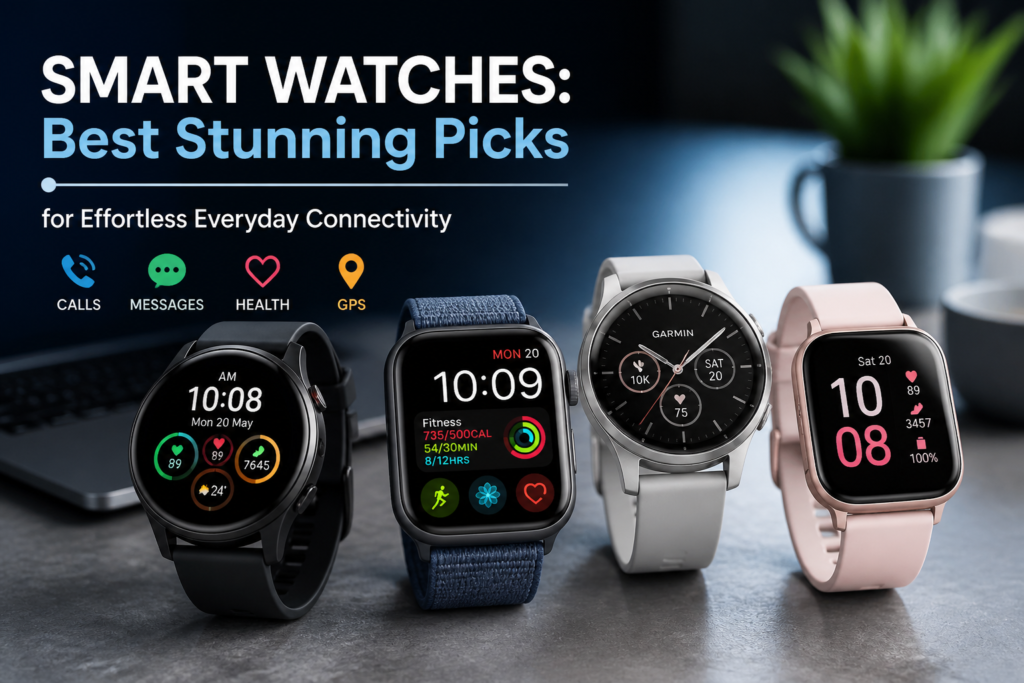
For iPhone users, an Apple Watch is often the most seamless option. Its close integration with Apple devices supports notifications, calls, messages, voice commands, maps, and music controls. Additionally, health and fitness tools are major strengths. They include activity tracking, heart-rate monitoring, sleep insights, workout detection, and emergency assistance.
Apple Watch models appeal to people who want a polished interface and many apps. Newer versions may offer advanced health features, brighter displays, stronger durability, and better battery efficiency. However, most Apple Watch features target the iPhone ecosystem. Therefore, Android users should consider other options.
Best for Android Users
Samsung Galaxy Watch models suit Android users who want attractive designs, health features, and close Samsung compatibility. These watches typically provide activity tracking, sleep analysis, heart-rate monitoring, workout modes, mobile payments, notifications, and voice assistance.
Google Pixel Watch devices are another appealing option. Meanwhile, their clean software, Google service integration, and Fitbit wellness tools support people who use Google Calendar, Google Maps, Google Assistant, and Android apps. They suit users who want a minimalist design and a smooth Google ecosystem.
Best for Fitness and Outdoor Activities
Athletes and outdoor enthusiasts often need more than notifications and step counting. For this reason, fitness-focused watches from Garmin, COROS, and similar brands prioritize GPS accuracy, training analysis, route tracking, recovery data, and battery life.
These watches suit runners, cyclists, hikers, swimmers, and endurance athletes. Many include training load, pace guidance, elevation, race preparation, heart-rate zones, and recovery recommendations. Although their designs may look less fashion-oriented, they often provide better durability and run for days or weeks between charges.
Essential Features to Compare
Health and Wellness Tracking
Health monitoring is a major reason people buy smart watches. Depending on the model, features may include heart-rate tracking, blood oxygen measurements, sleep monitoring, stress estimates, breathing exercises, menstrual-cycle tracking, and irregular rhythm alerts.
These tools can encourage healthier habits by revealing patterns. For example, you may notice that poor sleep affects workout performance. Similarly, you may see activity levels drop during long workdays. Smart watches are not medical diagnostic devices. Still, they can provide useful information and encourage discussions with a healthcare professional. The FDA’s guidance on low-risk general wellness devices explains the distinction.
Fitness Tracking and GPS
A capable smart watch should record workouts accurately and provide useful feedback. Basic models may count steps and estimate calories. In contrast, advanced options can recognize activities and track pace, distance, cadence, elevation, and heart-rate zones.
Built-in GPS helps with outdoor exercise because you can leave your phone behind while recording routes. Therefore, runners and cyclists should compare GPS accuracy, workout customization, and training-platform compatibility.
Battery Life
Battery life strongly affects convenience. Some feature-rich models need daily charging, while fitness-oriented watches may last a week or longer. Furthermore, an always-on display, GPS, cellular connectivity, and frequent health measurements can reduce battery performance.
Consider your routine before choosing a device. Daily charging may work if you already charge your phone each night. On the other hand, longer battery life matters more for travelers, campers, and people who want uninterrupted sleep tracking.
Connectivity and Smart Features
Smart watches can connect through Bluetooth, Wi-Fi, and cellular networks. Bluetooth models depend on a nearby smartphone for many functions. By comparison, cellular models can make calls, send messages, stream music, and access online services independently. They usually require an additional carrier plan.
Other useful features include contactless payments, voice assistants, music storage, navigation, emergency detection, fall alerts, and smart-home controls. Consequently, these extras can turn a watch into a practical control center.
Design, Comfort, and Durability
A smart watch should feel comfortable all day and night. Case size, weight, strap material, display shape, and water resistance all matter. Larger screens are easier to read and use, whereas smaller cases may feel better on slimmer wrists.
Water resistance helps with swimming, rain, and everyday protection, but ratings vary. For instance, a watch designed for swimming may not support diving. Also, water resistance can weaken over time. Outdoor workers and serious athletes should look for scratch-resistant glass, reinforced cases, and secure straps.
How to Choose the Right Smart Watch
Start by checking compatibility with your smartphone. Next, identify your main purpose. You might prioritize communication, fitness, health tracking, travel, productivity, or a mix of these needs. Then compare battery life, app support, display quality, GPS performance, durability, and software updates.
It is also wise to consider the total cost. A lower-priced watch may provide notifications and basic activity tracking. Meanwhile, premium models offer advanced sensors and stronger materials. Cellular service, replacement bands, subscriptions, and protective accessories can increase the final expense.
Ultimately, the best smart watch is not necessarily the model with the most features. It is the one that fits your routine, performs dependably, and provides information you will use. With the right choice, a smart watch can simplify communication, support healthier habits, and keep essential digital tools within reach.