


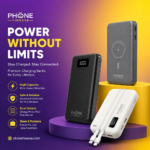
Large capacity power bank options have become essential for modern travel, work, and everyday convenience. Smartphones, tablets, wireless earbuds, cameras, handheld gaming consoles, and laptops all depend on reliable battery power, especially when electrical outlets are unavailable. The best charging solution depends on your devices, travel habits, and the amount of power you need. From compact pocket-sized models to high-capacity power stations, today’s portable chargers offer impressive flexibility and speed.
Large Capacity Power Bank: Choosing the Right Charging Banks for Your Devices
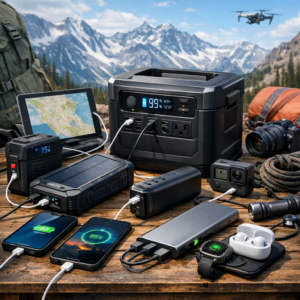
Before buying a portable charger, consider battery capacity, output wattage, charging ports, size, and safety features. Manufacturers measure capacity in milliamp-hours, or mAh. A smaller model around 5,000 mAh may provide one emergency smartphone charge, while a large capacity power bank with 20,000 mAh or more can recharge several devices throughout the day.
For another helpful perspective, this Large Capacity Power Bank highlights practical trade-offs for buyers. For another helpful perspective, see this guide to the best portable chargers for fast charging and their practical trade-offs. Output power matters just as much. A charger with a high mAh rating may still charge slowly if it has a low-wattage output. Look for models that support modern fast-charging standards, including USB Power Delivery, Quick Charge, and wireless charging protocols. Port selection also matters if you regularly carry devices that use USB-C, USB-A, Lightning, or magnetic charging systems.
For a broad selection of portable power solutions, explore the portable power bank guide, where you can compare practical options for commuting, travel, emergency use, and outdoor adventures.
Large Capacity Power Bank for Long Trips
A large capacity power bank works well for flights, road trips, camping, festivals, and extended workdays. Models with capacities between 20,000 and 30,000 mAh can often charge a smartphone multiple times while also powering tablets, cameras, and smaller accessories.
When selecting a high-capacity model, check its airline compatibility. Most airlines allow power banks in carry-on luggage, but units above certain watt-hour limits may require approval or may face restrictions. The FAA’s lithium battery safety guidance explains important rules for carrying spare batteries and power banks. A clear capacity label and built-in safety protections make travel easier.
Large models generally weigh more than compact chargers, but the extra weight can be worthwhile when access to wall outlets is limited. Look for overload, overcharge, short-circuit, and temperature protection for safer long-term use.
Large Capacity Power Bank: Fast-Charging Portable Charger for Everyday Convenience
A fast-charging portable charger reduces the time your devices remain connected. It helps when you have only a short break before leaving home, boarding a train, or attending a meeting. Many modern chargers can deliver enough power to restore a smartphone battery significantly in 30 minutes.
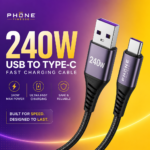
For the best results, both the portable charger and your device must support compatible charging standards. You also need a suitable cable capable of handling the required wattage. A fast charger paired with an outdated or low-quality cable may deliver slower performance.
Some fast-charging models include multiple ports, allowing you to recharge a phone and wireless earbuds simultaneously. However, remember that the charger may divide its total output when you connect several devices.
USB-C PD Power Bank for Phones, Tablets, and Laptops
A USB-C PD power bank uses USB Power Delivery to provide higher charging speeds and broader compatibility. Depending on its wattage, it can power smartphones, tablets, gaming devices, cameras, and select laptops.
For phones and tablets, a model delivering 20W to 45W is often sufficient. Laptop users should consider a charger rated at 60W, 65W, or higher, depending on the computer’s requirements. Check the laptop’s original power adapter to determine the appropriate wattage.
USB-C PD also helps simplify travel because one port can support multiple types of devices. Instead of carrying separate chargers for a phone, tablet, and computer, a capable power bank can serve as a central charging source.
MagSafe Magnetic Power Bank for Cable-Free Charging
A MagSafe magnetic power bank attaches directly to compatible iPhones and provides convenient wireless charging without a cable. Its magnetic alignment helps keep the charger in place while you use the phone, making it practical for walking, commuting, or navigating.
The main advantage is convenience, although wireless charging typically produces more heat and may work more slowly than wired charging. Magnetic power banks work best for topping up your phone during the day rather than replacing a high-capacity wired charger for extended trips.
Before purchasing, verify compatibility with your phone model and case. Thick, non-magnetic, or metal cases may prevent proper attachment or reduce charging efficiency.
OLED Smart Digital Display Power Bank
An OLED smart digital display power bank shows accurate information about remaining battery capacity, charging status, output, or port activity. This provides more detail than a simple row of indicator lights, which may only offer a rough estimate.
A digital display can help you plan your charging strategy. For example, you can quickly determine whether the power bank has enough energy to recharge a laptop or whether you should top it up before leaving home. Some models also show the power they deliver in real time, which can help identify cable or compatibility issues.
Laptop Portable Charger for Remote Work
A laptop portable charger gives remote workers and students greater freedom when they work away from offices or power outlets. These chargers require higher output than ordinary phone power banks, so wattage and USB-C PD support are critical.
Choose a model that matches or exceeds your laptop’s charging requirement. A computer that normally uses a 65W adapter may charge slowly or fail to charge under heavy use with a lower-powered bank. Capacity also matters because laptop batteries consume considerably more energy than smartphone batteries.
For professional use, prioritize durable construction, reliable thermal management, multiple ports, and pass-through charging if you need to recharge the power bank while using it to power another device.
Ultra-Slim Pocket Power Bank for Daily Carry
An ultra-slim pocket power bank prioritizes convenience over maximum capacity. It can fit inside a small bag, jacket pocket, or even some clothing pockets, making it a practical backup for daily commutes and short outings.
These models generally offer enough energy for an emergency smartphone boost. Some include built-in cables, foldable connectors, or magnetic attachments that reduce the need to carry accessories. Their lightweight design makes them particularly useful for concerts, city tours, conferences, and quick errands.
Eco-Friendly Bioplastic Power Bank Options
An eco-friendly bioplastic power bank uses plant-based or partially renewable materials in some components of its housing. These products still contain electronic parts and batteries that require responsible disposal, but they can reduce reliance on conventional petroleum-based plastics.
Sustainability also depends on product lifespan. A durable charger that works reliably for several years may prove more environmentally responsible than a fragile model that needs frequent replacement. Look for recyclable packaging, repair information, responsible battery disposal guidance, and reputable manufacturing practices.
Multi-Device Charging Brick for Families and Travel
A multi-device charging brick can power several devices from one wall outlet or portable source. These chargers help families, shared workspaces, and travelers carrying phones, tablets, watches, earbuds, and cameras.
When choosing one, review the total wattage and how the charger distributes power between ports. A charger may advertise a high combined output but reduce individual port speeds when you connect multiple devices. USB-C ports are generally the most versatile, while USB-A ports remain useful for older cables and accessories.
High-Wattage Power Station for Serious Adventures
A high-wattage power station suits camping, emergency preparedness, outdoor work, and extended off-grid use. Unlike standard power banks, power stations may include AC outlets, USB ports, DC outputs, built-in lights, and large battery capacities.
These units can operate laptops, cameras, portable refrigerators, CPAP machines, and other equipment, depending on their continuous and peak wattage ratings. They weigh more and offer less portability than pocket chargers, but their versatility makes them valuable for demanding situations.
When buying a power station, consider battery chemistry, recharge time, solar compatibility, noise level, portability, and the number of outlets. A model with a pure sine wave inverter generally works better for sensitive electronics.
Safety and Maintenance Tips
Use the charging cable recommended for your device and avoid exposing any power bank to extreme heat, moisture, or direct sunlight for long periods. Do not use a charger that is swollen, cracked, unusually hot, or physically damaged. Store it partially charged if you will not use it for several months, and recharge it periodically.
The ideal charging bank balances capacity, speed, portability, and compatibility. A slim charger may be perfect for everyday emergencies, while a USB-C PD model can support laptops and tablets. For demanding travel or outdoor use, a high-capacity bank or power station offers the dependable energy reserve needed to keep every essential device running.