
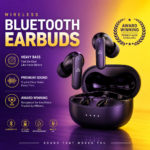


This guide shares wireless earbuds buying tips for comparing sound quality, comfort, battery life, connectivity, and useful features. Whether you want immersive audio for commuting, a secure fit for exercise, or comfortable listening at home, the right pair can make every moment more enjoyable.
Wireless Earbuds Buying Tips: Key Features to Compare
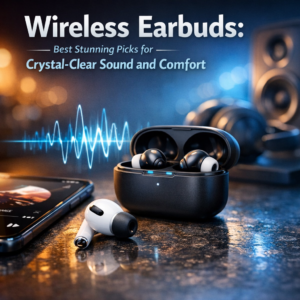
For another helpful perspective, this Wireless Earbuds Buying Tips highlights practical trade-offs for buyers. Modern wireless earbuds use Bluetooth technology to connect with smartphones, tablets, laptops, and other compatible devices. The best Bluetooth earbuds pair quickly, maintain a stable connection, and deliver clear audio without noticeable delays. In addition, many models support multipoint connectivity, allowing users to switch between devices without repeatedly disconnecting and reconnecting.
A major advantage is portability. Small charging cases protect the earbuds while providing extra power, making them easy to carry in a pocket or bag. For shoppers comparing different designs and features, browsing a dedicated comparison guide can simplify the search and help identify models suited to specific listening needs. For a technical overview of how Bluetooth works, see the official Bluetooth technology overview.
Wireless Earbuds Buying Tips: Choosing Wireless Earbuds for Crystal-Clear Sound
Sound quality depends on more than brand reputation. Drivers, codec support, tuning, and the seal created by the ear tips all influence what you hear. Well-designed wireless earbuds produce balanced sound with distinct vocals, controlled bass, and detailed high frequencies. Furthermore, some models offer companion apps with equalizer settings, allowing listeners to adjust the sound profile for music, spoken content, or gaming.
Bluetooth codecs can also affect performance. Standard connections are suitable for everyday listening, while advanced codecs may improve detail and reduce compression on compatible devices. However, compatibility between the earbuds and the source device is essential, so it is worth checking supported formats before purchasing.
For phone calls, look for multiple microphones and voice-processing technology. These features help isolate speech from wind and background noise, making Bluetooth earphones more effective in busy streets, offices, and public transportation.
Wireless Earbuds Buying Tips: Active Noise Cancelling Earbuds for Focused Listening
Active noise cancelling earbuds use microphones to detect surrounding sounds and create opposing audio signals that reduce unwanted noise. This technology is particularly useful on airplanes, trains, in cafés, and in open offices. As a result, strong noise cancellation can make music feel more immersive while allowing users to listen at lower volumes.
Many models include transparency or ambient modes as well. Instead of blocking external sounds, this feature feeds selected environmental audio into the earbuds. It is valuable when hearing announcements, speaking with someone, or staying aware of traffic is important. Therefore, the ability to switch between noise cancellation and transparency gives one pair of earbuds greater flexibility.
True Wireless Stereo and Everyday Convenience
True wireless stereo earbuds have no cable connecting the left and right sides. Each earbud communicates wirelessly with the device and delivers an independent audio channel. Consequently, this completely cord-free design offers freedom of movement and a clean appearance.
A good true wireless stereo model should be comfortable, simple to control, and dependable when removing or inserting either earbud. Touch controls can manage playback, calls, volume, and voice assistants, while in-ear detection may automatically pause audio when an earbud is removed. In practice, these small conveniences make a noticeable difference during daily use.
Long Battery Life Earbuds for Busy Schedules
Battery performance is an important consideration for commuters, travelers, students, and professionals. Long battery life earbuds can often provide several hours of listening on a single charge, with the charging case extending total playtime considerably. Moreover, fast-charging support is especially useful when a short charging session provides enough power for several hours.
Battery claims can vary depending on volume, noise cancellation, call usage, and connection features. Users who frequently travel should consider a case with USB-C charging and, where available, wireless charging. Additionally, a clear battery indicator on the phone or case helps prevent unexpected interruptions.
Spatial Audio Earbuds for a More Immersive Experience
Spatial audio earbuds create a wider, more three-dimensional listening experience. Compatible music, movies, and games can sound as though audio is coming from different positions around the listener rather than directly inside the ears. Some premium models also include head tracking, which adjusts the soundstage as the user moves.
This feature can be particularly impressive for cinematic content and immersive music mixes. However, spatial audio may use more battery power, and not all content is mastered to support it. Buyers should therefore treat it as an added benefit rather than the only reason to choose a particular model.
Sports Wireless Earbuds That Stay Secure
Sports wireless earbuds are designed for movement. A secure fit is essential for running, gym workouts, cycling, and other active pursuits. Ear hooks, stabilizing wings, or carefully shaped ear tips can prevent the earbuds from slipping during exercise.
Sweat resistance is another important feature. Waterproof Bluetooth earbuds with an appropriate water-resistance rating provide better protection against perspiration and light rain. Nevertheless, it is important to understand the rating before use, since water resistance does not always mean the earbuds can be submerged or used while swimming.
Controls should also be easy to operate during activity. For example, physical buttons may be preferable to touch controls when hands are wet or when accidental taps could interrupt a workout.
Open Ear Earbud Designs and Situational Awareness
An open ear earbud rests near the ear canal instead of sealing it completely. This design allows users to hear music while remaining aware of nearby conversations, vehicles, alarms, and other environmental sounds. As a result, it can be useful for outdoor walks, office environments, and activities where awareness matters.
Open-ear models may not deliver the same deep bass or noise isolation as sealed in-ear earbuds, but they often provide greater comfort for people who dislike the plugged-in sensation. Fit, speaker placement, and volume control are especially important because sound leakage may be more noticeable in quiet surroundings.
Comfort, Durability, and Fit Matter
Even the best-sounding earbuds are disappointing if they become uncomfortable after a short time. Look for multiple ear-tip sizes, lightweight construction, and a shape that sits naturally in the ear. A secure seal improves bass response and passive noise isolation, while an incorrect fit can reduce sound quality and cause fatigue.
Durability should also match your routine. Travelers may value a sturdy case, athletes may need sweat protection, and office users may prioritize comfortable all-day wear. In addition, reviewing microphone quality, charging design, warranty coverage, and app support can help ensure the earbuds remain useful long after the initial purchase.
Ultimately, the ideal pair of wireless earbuds balances sound quality, comfort, battery performance, connectivity, and practical features. By considering how and where they will be used, shoppers can choose a model that delivers clear audio and dependable performance without unnecessary compromises.