
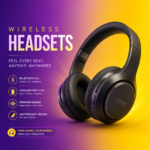
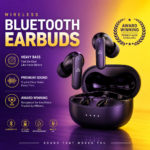


Sports wireless earbuds have changed how people enjoy music, podcasts, calls, and audiobooks. They offer freedom of movement without a cable. Today, many models deliver balanced sound, stable connections, comfortable fits, clear microphones, active noise cancellation, and spatial audio. Ultimately, the right pair depends on how you plan to use it. For more buying guidance, see our wireless earbuds features and buying guide.
Sports Wireless Earbuds: What Makes Wireless Earbuds Stand Out?
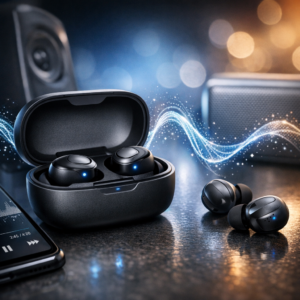
Modern wireless earbuds use Bluetooth with smartphones, tablets, computers, smartwatches, and other compatible devices. In addition, many are true wireless stereo models. Each earbud works independently without a connecting cable. As a result, this design suits commuting, exercise, work, and relaxation.
Sound quality has also improved. For example, better drivers, refined tuning, and advanced codecs can deliver clear vocals, detailed instruments, and strong bass. Some premium models support high-resolution streaming. Others, meanwhile, use a warm, energetic sound that suits popular music.
Comfort matters just as much. Lightweight earbuds with several ear tip sizes can create a secure seal without excess pressure. Therefore, a good fit improves sound and passive noise isolation. Poorly fitting earbuds may sound thin or fall out during movement.
Sports Wireless Earbuds: Wireless Earbuds With Active Noise Cancellation
Active noise cancelling earbuds suit travelers, office workers, and city commuters. First, external microphones detect surrounding sounds. The earbuds then produce opposing sound waves to reduce unwanted noise. Consequently, this can make airplane engines, traffic, air conditioners, and conversations less distracting.
Strong noise-cancelling models often include several listening modes. For instance, transparency or ambient mode lets outside sounds pass through. This makes announcements and conversations easier to hear. Some products adjust cancellation automatically. Others, however, let users control it through a mobile app.
Noise cancellation uses more battery power. Therefore, compare playtime with the feature switched on. Do not rely only on the maximum advertised figure. Comfort also matters because effective cancellation often requires a secure in-ear seal.
Choosing Bluetooth Earphones for Calls
Bluetooth earphones now support music, work meetings, video calls, gaming, and voice messages. In practice, call quality depends on microphone placement, noise reduction, wind handling, and connection stability.
Look for earbuds with multiple microphones and voice processing. Beamforming microphones can focus on your voice. They can also reduce nearby sounds. Some models work best indoors. Others, by contrast, maintain clearer calls outdoors in windy conditions.
Multipoint pairing is another useful feature. It connects earbuds to two devices at once, such as a laptop and smartphone. As a result, the earbuds can switch from computer audio to a phone call without manual reconnection.
Long Battery Life Earbuds for Travel and Work
Long battery life earbuds suit commuters, travelers, students, and professionals. Most provide several hours of listening from the earbuds. Additionally, the charging case extends total use throughout the day.
A useful case should be compact and easy to open. It should also provide several additional charges. USB-C charging is common. Some premium models support wireless charging. Furthermore, fast charging helps when you need power quickly. A short charge may provide several hours of playback.
Battery claims vary with volume, codec, noise cancellation, and call use. Therefore, consider realistic daily listening instead of the highest number on the package.
Spatial Audio Earbuds and Immersive Listening
Spatial audio earbuds create a three-dimensional listening experience. Instead of staying in a fixed left-right arrangement, sounds appear around the listener. Consequently, compatible movies, shows, and music can feel more immersive.
Some earbuds support head tracking. This feature adjusts the sound position as you move. For example, dialogue may remain centered while background effects come from different directions. Spatial audio works best with content mixed for the format. Some devices also apply virtual surround processing to standard audio.
The feature is not essential for everyone. However, it appeals to people who watch films or use supported music services. Spatial audio can also improve gaming when paired with low-latency connectivity.
Sports Wireless Earbuds for Active Lifestyles
Sports wireless earbuds should stay secure during running, cycling, gym sessions, and outdoor training. Wing tips, ear hooks, and contoured housings can improve stability. Nevertheless, comfort still varies by person. Try different ear tip sizes before judging the fit.
Sweat resistance is another key consideration. Waterproof Bluetooth earbuds with a suitable IP rating offer better protection from moisture, rain, and perspiration. However, water resistance does not always mean swimming is safe. Check the exact rating and manufacturer instructions before exposing earbuds to significant water.
Sports-focused models may include transparency modes. As a result, runners and cyclists can hear traffic, pedestrians, and other surroundings while listening to music. For technical background, review the Bluetooth technology overview from the Bluetooth SIG.
The Growing Appeal of the Open Ear Earbud
An open ear earbud rests near the ear canal instead of sealing inside it. This design helps users stay aware of their surroundings. Therefore, it suits outdoor exercise, offices, and situations where complete isolation is undesirable.
Open-ear designs use directional sound or bone-conduction principles. They usually provide less bass and isolation than in-ear models. However, they offer strong environmental awareness. They may also feel more comfortable for people who dislike ear canal pressure.
Open-ear earbuds may struggle in very noisy environments because sound is not sealed directly into the ear. Still, they offer a practical alternative for users who value awareness and comfort over maximum immersion.
How to Select the Right Pair
Start with your main priority. Travelers may prefer active noise cancelling earbuds and a compact case. Similarly, athletes may need sports wireless earbuds with a secure fit and water resistance. Office users often value microphone quality, multipoint pairing, and comfort more than heavy bass.
Also consider compatibility. Some earbuds offer their best features with devices from the same brand. Others work across Android, iOS, Windows, and macOS. Before buying, check app support, firmware updates, touch controls, and warranty coverage.
Do not judge quality by price alone. A midrange pair may provide excellent sound and reliable performance. Conversely, an expensive model may focus on features you do not need. Ultimately, the best pair fits securely, sounds enjoyable, connects reliably, and matches your routine.