
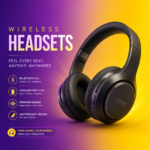
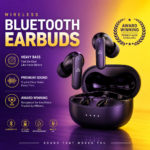


Lossless wireless audio has changed how listeners enjoy music, films, podcasts, and games. Today’s best wireless headsets offer detailed sound, smart noise control, reliable connections, and lasting comfort. Whether you work in a busy office, travel often, or want high-fidelity listening at home, a modern headset can replace wired headphones with little compromise.
What Makes Lossless Wireless Audio Different?
Traditional Bluetooth audio often compresses music. As a result, this reduces file size and saves battery power. However, compression can affect subtle detail, impact, and spatial definition.
By contrast, lossless wireless audio aims to preserve more of the original recording. As a result, listeners may hear cleaner vocals, more precise instruments, and stronger dynamics. For more technical background, read the official Bluetooth LE Audio overview.
A headset labeled Hi-Res wireless certified has usually met standards for frequency response and wireless performance. Still, certification does not guarantee a dramatic difference for every listener. It can, however, identify products designed with serious audio quality in mind. In addition, your phone, computer, streaming service, and headset must support compatible high-quality codecs.
Sound quality depends partly on the drivers inside the ear cups. Dynamic drivers remain popular because they produce energetic bass and broad, enjoyable sound. Meanwhile, a planar magnetic wireless headset uses a thin diaphragm and magnetic array. This design can deliver fast, controlled audio with excellent detail. Therefore, it may suit listeners who enjoy classical music, jazz, acoustic recordings, and studio tracks.
Lossless Wireless Audio: Choosing a Spatial Audio Headset
A spatial audio headset makes sound seem to come from different directions. Consequently, films can feel more cinematic, while compatible games can offer better positional awareness. Some systems use virtual surround processing. Others, by contrast, support object-based formats that place dialogue, effects, and music in a three-dimensional sound field.
Spatial audio works best when it includes head tracking. As you turn your head, the soundstage stays anchored. This makes the experience feel more natural. However, not every recording benefits from spatial processing. For that reason, many users prefer stereo mode for music. They then activate spatial audio for movies, gaming, and selected immersive tracks.
Lossless Wireless Audio: Smart Noise Control for Work and Travel
Noise cancellation is now one of the most useful features in premium wireless headsets. In particular, Adaptive active noise cancellation adjusts its filtering to match the surroundings. For example, a headset may use stronger cancellation on an airplane and gentler processing in a quiet room.
This approach can improve comfort. In addition, the headset does not need to operate at maximum intensity all day. Effective noise cancellation may also reduce the urge to raise the volume. Therefore, listeners can enjoy music more comfortably during long journeys.
At the same time, transparency mode wireless technology lets outside sounds pass through the microphones. This helps when you need to hear announcements, speak with colleagues, or walk near traffic. The best transparency modes sound natural instead of robotic. Furthermore, many can be adjusted through a companion app.
Call quality matters as much as music playback. An AI environmental noise canceling mic can separate speech from keyboard clicks, traffic, wind, and nearby conversations. As a result, calls may sound clearer in busy places. Nevertheless, microphone performance still depends on headset placement and voice-processing software.
Connectivity Features Worth Considering
Gamers and video viewers should look for ultra-low latency wireless performance. Lower latency reduces the delay between an action and its sound. Consequently, this creates better synchronization during gaming and streaming. Some headsets include dedicated USB transmitters. Others, however, use optimized Bluetooth modes.
Bluetooth LE Audio is another important development. It is designed to improve power efficiency and support advanced features. These include better-quality transmission and broadcast audio. For example, one promising feature is Auracast. An auracast ready headset may connect to shared broadcasts in airports, museums, classrooms, gyms, and other public venues. However, availability depends on local infrastructure.
For people who switch devices often, a multipoint Bluetooth headset can save time. Multipoint keeps the headset connected to two devices, such as a laptop and smartphone. It can then move between them when a call arrives or media starts. Therefore, this feature is especially useful for hybrid workers and commuters.
Comfort Is Essential for All-Day Listening
Even a great-sounding headset can disappoint if it becomes uncomfortable after an hour. A lightweight ergonomic headband spreads pressure across the top of the head. It also reduces uncomfortable pressure points. Additionally, adjustable hinges and smooth extension mechanisms help create a secure fit.
The ear cups deserve equal attention. Breathable cooling ear cups can reduce heat buildup during long sessions. This matters especially in warm rooms. Memory foam cushions with fabric or perforated covers often feel cooler than thick synthetic leather. However, leather-style pads may provide stronger passive isolation.
True all-day wear comfort comes from several factors. These include low weight, balanced clamping force, soft cushions, and breathable materials. Also, consider glasses, hairstyles, and ear size. Each factor can change how a headset feels over several hours.
Battery Life and Travel-Friendly Design
Battery performance varies widely. For frequent travelers, a 100-hour battery life headset may suit people who dislike charging. However, quoted figures usually depend on volume, noise cancellation, and codec choice. Even 30 to 50 hours can provide practical everyday use.
A fast-charge wireless headset adds convenience when the battery is nearly empty. For example, ten or 15 minutes of charging may provide several hours of playback. That makes it easier to prepare for a commute or flight. In addition, some premium models work with a Qi wireless charging dock. You can then charge the headset by placing it on a compatible stand.
A foldable travel wireless design helps when space matters. Hinges that fold the ear cups inward make storage easier. Moreover, a protective case is also worthwhile. It can protect premium models with exposed hinges or delicate finishes.
Finding the Right Headset for Your Lifestyle
The ideal headset depends on how you plan to use it. Audiophiles may prioritize lossless support, Hi-Res certification, and planar magnetic drivers. Meanwhile, travelers may prefer adaptive noise cancellation, long battery life, fast charging, and a compact case. Office workers, on the other hand, should focus on microphone quality, multipoint Bluetooth, transparency mode, and comfort.
For related connected accessories, browse the Phone Finesse shop. Smart devices increasingly work together. As a result, they can help you control playback, manage calls, and handle daily routines from a phone or wrist-worn device.
Before buying, check codec compatibility, app support, microphone reviews, replacement ear pad availability, and warranty coverage. Features matter. Still, reliable everyday performance is more important than an impressive specification sheet.
Overall, the best wireless headsets balance refined sound, smart connectivity, effective noise management, and lasting comfort. Match the key features to your listening habits. Then you can enjoy excellent sound at home, dependable performance at work, and comfortable listening throughout the day.